
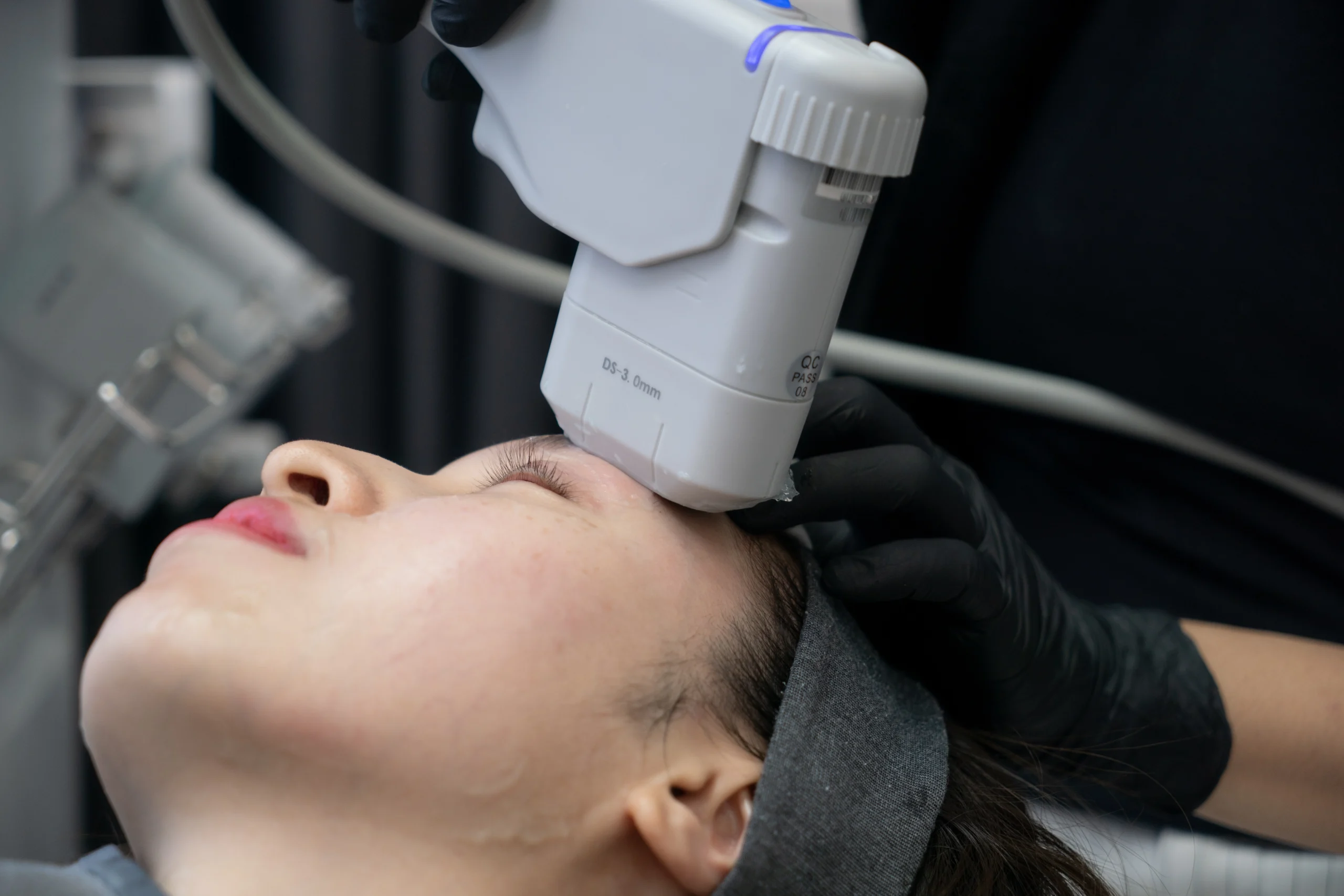
Key Things to Know Before Your HIFU Treatment
What is HIFU Treatment?
High-intensity focused ultrasound (HIFU) is a minimally invasive procedure that uses focused, high-frequency sound waves to target deeper layers of the skin and stimulate collagen production. These sound waves will gradually deliver controlled heat to the treatment area, which may stimulate collagen production. As collagen naturally maintains your skin’s firmness and elasticity, the treatment’s effects gradually lift and tighten your skin, reducing wrinkles and rejuvenating your appearance.
What Does HIFU Do?
HIFU is commonly used to treat various skin concerns related to ageing, as our skin gradually loses its flexibility and firmness. HIFU is often performed to manage a range of skin conditions:
- Manage facial wrinkles
- Reduce skin sagging
- Improve skin tone
- Lift and tighten specific areas
- Improve facial contours
- Gradually restore skin appearance
How HIFU Works
During the HIFU treatment, a certified ultrasound device emits high-frequency sound waves that reach a specific depth in the skin with precision, delivering low levels of heat to the treatment area, triggering the body’s healing response. As part of this, it may stimulate collagen production, a naturally occurring protein that provides structural support to surrounding tissues and facilitates cellular repair.
An increase in collagen levels may help lift, tighten, and tone your skin, restoring your facial appearance. The treatment’s results typically last a few weeks to a few months, which may reduce the appearance of wrinkles and sagging skin without surgery.
Am I a Suitable Candidate for HIFU?
HIFU is typically recommended for individuals with mild to moderate skin laxity, particularly those in their thirties to fifties, to address wrinkles, fine lines, and mild skin sagging. HIFU may be performed in tandem with other treatments for more advanced skin concerns.
HIFU Facelift
HIFU treatments are often referred to as facelifts because collagen’s effects lead to gradual skin tightening and healing. Conventional facelift treatments typically involve some degree of surgery and require extensive care and healing to minimise side effects. As HIFU is a nonsurgical treatment, it has slowly gained popularity as a minimally invasive facelift alternative.
Is HIFU Painful?
During the procedure, some people may find the ultrasound’s warmth tolerable, while others may request the aesthetic doctor to adjust the energy levels as needed. Do communicate with the aesthetic doctor if you find the current ultrasound level uncomfortable.
HIFU Treatment Process
The HIFU treatment process typically takes at least 30 minutes to an hour, but may vary depending on the treatment location and other factors.
The Initial Consultation
You will first meet with the certified aesthetic doctor to assess your suitability for HIFU by reviewing your medical history and asking relevant questions. They will carefully consider your skin type, general health, and other key factors to determine your eligibility, then discuss the procedure and general treatment expectations in detail. You can also ask questions about the treatment to address your doubts or concerns.
Pre-Treatment Preparations
You may need to follow the aesthetic doctor’s advice to minimise the risk of side effects before your scheduled appointment. These may include refraining from using certain skincare products, staying hydrated, and reducing daily sun exposure.
The HIFU Procedure
On the appointed date, the aesthetic doctor will provide final advice before beginning a skin cleanse to remove any lotions, makeup, or oils from your skin. A topical numbing cream may also be applied for your comfort during the procedure.
The aesthetic doctor will carefully direct the ultrasound machine’s high-intensity sound waves to the treatment area. You may feel a warm, tingling sensation as the ultrasound energy penetrates the deeper layers of the skin.
Aftercare & Follow-up Sessions
Once treatment concludes, you will be given aftercare instructions to help maintain your skin’s condition and ensure consistent results. There is minimal downtime after treatment, so you may resume your daily activities as usual while abiding by the aftercare instructions. You may experience some mild side effects that will gradually subside.
Follow-up sessions are scheduled to make adjustments and provide other recommendations to maintain treatment results, including regular maintenance sessions to prolong HIFU’s benefits.
What to Avoid After HIFU Treatment
Here are some key tips to:
- Use a mild, gentle cleanser instead of harsh or abrasive ones to wash your face and maintain hydration.
- Avoid anything involving high temperatures, such as saunas, tanning beds, and prolonged Sun exposure.
- Use sunscreen with SPF 50 or higher to protect your skin from UV rays while outside.
- Refrain from using makeup for the first 24 hours after the HIFU treatment to allow your skin to breathe.
- Avoid invasive treatments like chemical peels or microneedling for the first few months after the HIFU treatment.
- Follow your aesthetic doctor’s recommendations for HIFU follow-up sessions and other aftercare provisions.
HIFU Side Effects
Common side effects include mild bruising, tingling, and skin redness, but these will gradually subside on their own. If side effects persist, notify your aesthetic doctor immediately.
How Long Does HIFU Last?
HIFU results vary among individuals, but they typically last several months.
How Long to See Results on Face After HIFU
Collagen growth takes time, so you will gradually notice the results of the HIFU treatment, such as improved skin tightness and texture, within the first few months. Results may vary from person to person, and follow-up sessions will be necessary to maintain these results.
How Often to Do HIFU
Follow-up maintenance sessions are scheduled accordingly based on your aesthetic doctor’s assessment. It is common to schedule follow-ups every 12 to 18 months to maintain the effects of HIFU over time.
Ultherapy vs. HIFU
Ultherapy and HIFU share similarities: both are nonsurgical, minimally invasive treatments that use ultrasound waves to stimulate collagen production in the deeper layers of our skin. However, both techniques do differ in certain ways.
For one, Ultherapy utilises micro-focused ultrasound energy, paired with real-time ultrasound imaging to visualise the layers beneath your skin. This allows Ultherapy to be used for more precise treatment at a foundational layer that surgical facelifts address. As a result, it is better suited to treating moderate skin laxity. In contrast, HIFU lacks the imaging precision that Ultherapy possesses, but is still valued for its low downtime and suitability for mild to moderate skin laxity.
Curious to learn more about HIFU treatments? Visit JY Medical Aesthetics Clinic today and speak with our team for a thorough consultation tailored to your aesthetic needs!
